Still lots of myseries are surrounding
the Great Pyramid of Giza which probably are never going to be revealed,
but I think that it`s the shade of a mysery which make the wonder even
more magneting and admiring. Going through the notes and research works
about the Pyramid I found some particularly interesting and catchy facts
which are highlihted below:

1. Let’s start with a little funny paradox, did you know that the owner
of the largest pyramid of Giza is also known for having the smallest
Egyptian royal sculpture ever discovered? The ivory statue of paraoh
Khufu (AKA Cheops) found at Abydos is 7.5 cm high.

2. But you wouldn’t call Khufu a small guy in real life, in fact he is
known as a big and cruel leader. As described by Herodotus: “Cheops
moreover came, they said, to such a pitch of wickedness, that being in
want of money he caused his own daughter to sit in the stews, and
ordered her to obtain from those who came a certain amount of money (how
much it was they did not tell me): and she not only obtained the sum
appointed by her father, but also she formed a design for herself
privately to leave behind her a memorial, and she requested each man who
came in to give her one stone upon her building: and of these stones,
they told me, the pyramid was built which stands in front of the great
pyramid in the middle of the three, each side being one hundred and
fifty feet in length.”

3. Here are some significant figures: Khufu was 20 when he came to the
throne and at once began building his “Stairway to Heaven”. Khufu was
the first pharaoh who build a pyramid at Giza. The entire project took
about 23 years to complete, 2,300,000 building blocks, weighing an
average of 2.5 tons each (Although
some weigh as much as 16 tons)
were used to build the great pyramid. The length of each side of the
pyramid at the base is 755 feet (230.4 m). They rise at an angle of 51
52′ to a height, originally, of 481 feet (147 m) but nowadays 451 feet
(138 m).
4. Some believe that Khufu’s pyramid at Giza was built by slaves, but
modern Egyptologists accept that it was built by many tens of thousands
of skilled workers rather than slaves. It is known that Khufu’s nephew
Hemiunu was appointed head of construction for the Great Pyramid and
that Khufu provided good food and clothing for his workers. According to
Herodotus: “On the pyramid it is declared in Egyptian writing how much
was spent on radishes and onions and leeks for the workmen, and if I
rightly remember that which the interpreter said in reading to me this
inscription, a sum of one thousand six hundred talents of silver was
spent…”
5. Experts have talked a lot about the methods by which stone blocks
were raised into position, it is usually assumed that wooden and bronze
levers were used to put the blocks into position. “This pyramid was
made after the manner of steps which some called “rows” and others
“bases”: and when they had first made it thus, they raised the
remaining stones with machines made of short pieces of timber, raising
them first from the ground to the first stage of the steps, and when
the stone got up to this it was placed upon another machine standing on
the first stage, and so from this it was drawn to the second upon
another machine…” – describes Herodotus.

6. About 600 years ago, beautiful smooth blocks known as Casing Stones
covered the entire exterior of the pyramid, encasing the whole
structure, before the Arabs began to tear the stones off. The ancient
writer, Strabo, said: “It seemed like a building let down from heaven,
untouched by human hands.” It has been
calculated that the original
pyramid with its casing stones would act like gigantic mirrors and
reflect light so powerful that it would be visible from the moon as a
shining star on earth. At the present, only a few of these are left in
position on each side at the base. One of the largest remaining Casing
stones is nearly 5 feet high by 8 feet at the bottom, and weighs about
14 tons.

7. There are three known chambers inside the Great Pyramid – King’s
chamber, Queen’s chamber and unfinished chamber. A team of French
Egyptologists (Gilles Dormion and Jean-Yves Verd’hurt) claims that an
undiscovered room lies underneath the pyramid’s Queen’s Chamber and
insists that it is the actual burial chamber for Khufu and not the one
known as the King’s chamber. However, even those who believe that the
King’s chamber was never put to
use believe that Khufu may have been buried elsewhere rather than in
another, hidden chamber. Well, there are still lots of mysteries
concerning Khufu’s burial to be.. or never to be revealed.

8. One of the most mysterious parts of the Great Pyramid is the empty
coffer in the King’s Chamber, it is made from a solid block of
chocolate-colored granite and is even harder than the granite walls of
the King’s Chamber. For thousands of years, researchers have wondered
about its purpose. Ancient legend says that it
came from Atlantis or even from
America. It was never inscribed or decorated. Also, since it is too
large to pass through the low passages leading into the King’s Chamber,
it is considered to be placed in the chamber before the chamber was
closed and passages were sealed
9. The interior temperature of the Pyramid is constant and equals the
average temperature of the earth, 20 Degrees Celsius (68 Degrees
Fahrenheit).

10. Another pleasant discovery in the Great Pyramid is a spectacular
ancient cedar-wood boat, which was found sealed in a pit at the base of
the Great pyramid. This boat was interred in pieces and has since been
reassembled, restored and preserved in a climate controlled museum over
the site of the original pit. The name
“Djedefre”, who was Khufu’s son
and successor, is found on some of the slabs of stone that sealed the
pit, indicating that probably the boat was put there by Khufu’s son.


 1. Let’s start with a little funny paradox, did you know that the owner
of the largest pyramid of Giza is also known for having the smallest
Egyptian royal sculpture ever discovered? The ivory statue of paraoh
Khufu (AKA Cheops) found at Abydos is 7.5 cm high.
1. Let’s start with a little funny paradox, did you know that the owner
of the largest pyramid of Giza is also known for having the smallest
Egyptian royal sculpture ever discovered? The ivory statue of paraoh
Khufu (AKA Cheops) found at Abydos is 7.5 cm high.  2. But you wouldn’t call Khufu a small guy in real life, in fact he is
known as a big and cruel leader. As described by Herodotus: “Cheops
moreover came, they said, to such a pitch of wickedness, that being in
want of money he caused his own daughter to sit in the stews, and
ordered her to obtain from those who came a certain amount of money (how
much it was they did not tell me): and she not only obtained the sum
appointed by her father, but also she formed a design for herself
privately to leave behind her a memorial, and she requested each man who
came in to give her one stone upon her building: and of these stones,
they told me, the pyramid was built which stands in front of the great
pyramid in the middle of the three, each side being one hundred and
fifty feet in length.”
2. But you wouldn’t call Khufu a small guy in real life, in fact he is
known as a big and cruel leader. As described by Herodotus: “Cheops
moreover came, they said, to such a pitch of wickedness, that being in
want of money he caused his own daughter to sit in the stews, and
ordered her to obtain from those who came a certain amount of money (how
much it was they did not tell me): and she not only obtained the sum
appointed by her father, but also she formed a design for herself
privately to leave behind her a memorial, and she requested each man who
came in to give her one stone upon her building: and of these stones,
they told me, the pyramid was built which stands in front of the great
pyramid in the middle of the three, each side being one hundred and
fifty feet in length.”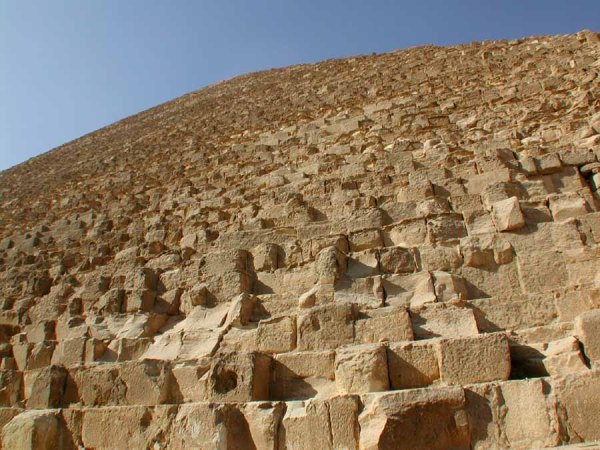 3. Here are some significant figures: Khufu was 20 when he came to the
throne and at once began building his “Stairway to Heaven”. Khufu was
the first pharaoh who build a pyramid at Giza. The entire project took
about 23 years to complete, 2,300,000 building blocks, weighing an
average of 2.5 tons each (Although
3. Here are some significant figures: Khufu was 20 when he came to the
throne and at once began building his “Stairway to Heaven”. Khufu was
the first pharaoh who build a pyramid at Giza. The entire project took
about 23 years to complete, 2,300,000 building blocks, weighing an
average of 2.5 tons each (Although 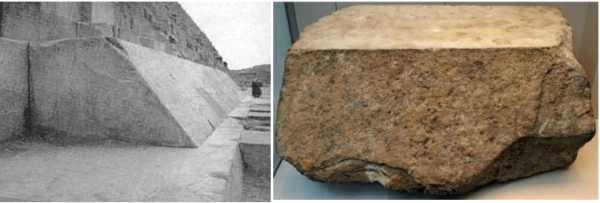 6. About 600 years ago, beautiful smooth blocks known as Casing Stones
covered the entire exterior of the pyramid, encasing the whole
structure, before the Arabs began to tear the stones off. The ancient
writer, Strabo, said: “It seemed like a building let down from heaven,
untouched by human hands.” It has been
6. About 600 years ago, beautiful smooth blocks known as Casing Stones
covered the entire exterior of the pyramid, encasing the whole
structure, before the Arabs began to tear the stones off. The ancient
writer, Strabo, said: “It seemed like a building let down from heaven,
untouched by human hands.” It has been 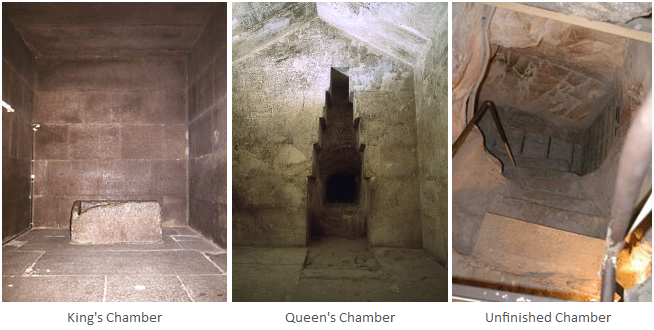 7. There are three known chambers inside the Great Pyramid – King’s
chamber, Queen’s chamber and unfinished chamber. A team of French
Egyptologists (Gilles Dormion and Jean-Yves Verd’hurt) claims that an
undiscovered room lies underneath the pyramid’s Queen’s Chamber and
insists that it is the actual burial chamber for Khufu and not the one
known as the King’s chamber. However, even those who believe that the
7. There are three known chambers inside the Great Pyramid – King’s
chamber, Queen’s chamber and unfinished chamber. A team of French
Egyptologists (Gilles Dormion and Jean-Yves Verd’hurt) claims that an
undiscovered room lies underneath the pyramid’s Queen’s Chamber and
insists that it is the actual burial chamber for Khufu and not the one
known as the King’s chamber. However, even those who believe that the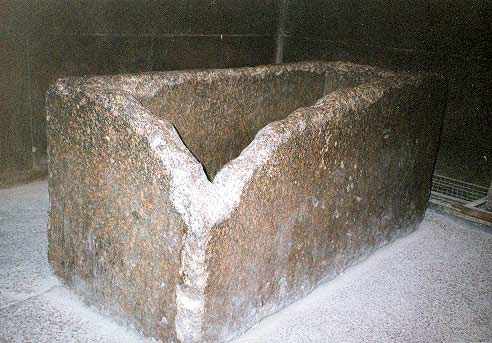 8. One of the most mysterious parts of the Great Pyramid is the empty
coffer in the King’s Chamber, it is made from a solid block of
chocolate-colored granite and is even harder than the granite walls of
the King’s Chamber. For thousands of years, researchers have wondered
about its purpose. Ancient legend says that it
8. One of the most mysterious parts of the Great Pyramid is the empty
coffer in the King’s Chamber, it is made from a solid block of
chocolate-colored granite and is even harder than the granite walls of
the King’s Chamber. For thousands of years, researchers have wondered
about its purpose. Ancient legend says that it 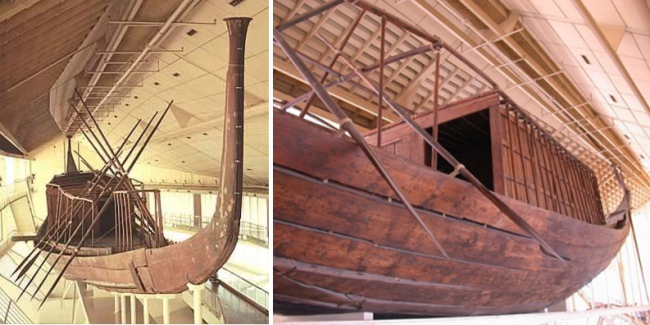 10. Another pleasant discovery in the Great Pyramid is a spectacular
ancient cedar-wood boat, which was found sealed in a pit at the base of
the Great pyramid. This boat was interred in pieces and has since been
reassembled, restored and preserved in a climate controlled museum over
the site of the original pit. The name
10. Another pleasant discovery in the Great Pyramid is a spectacular
ancient cedar-wood boat, which was found sealed in a pit at the base of
the Great pyramid. This boat was interred in pieces and has since been
reassembled, restored and preserved in a climate controlled museum over
the site of the original pit. The name 